Why Your Electric Bill Went Up and How To Reduce It In 2026
TL;DR
A new high-efficiency air conditioner can post a higher bill than the unit it replaced. The rating was measured on a test stand. Your bill is set by installed conditions: capacity larger than the real load, airflow nobody measured, ducts in a superheated attic. Each carries a documented penalty, and each is fixable without buying equipment again.
Key Takeaways
Common, not rare. ENERGY STAR reports more than half of new U.S. systems miss their rated efficiency because of improper installation, costing up to 30 percent of performance.
Oversizing has a measured cost. DOE cites a Florida study finding roughly 9 percent higher annual cooling electricity in systems oversized by half or more.
Airflow and attic ducts do the quiet damage. Airflow problems alone cut efficiency by up to 15 percent. Another 20 to 30 percent of duct air escapes through leaks, and attic heat gain can cost about 30 percent of peak sensible capacity.
Some of it is not your system. 2026 rates rose unevenly by state, and a drifted charge or new rate plan can raise a bill on a good install.
Why Is My Electric Bill Higher After a New AC?
Because the rating is earned on a test stand and the bill is set inside your house. Three installed conditions can cancel a high rating: capacity larger than the real load, airflow that was never measured, and supply ducts in a hot attic.
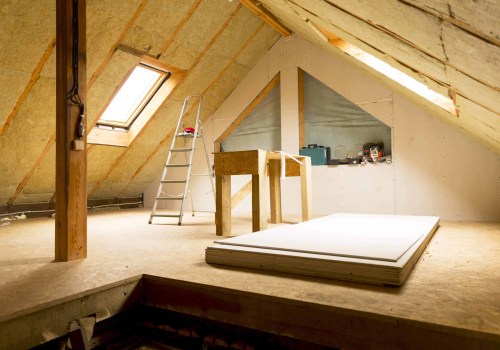
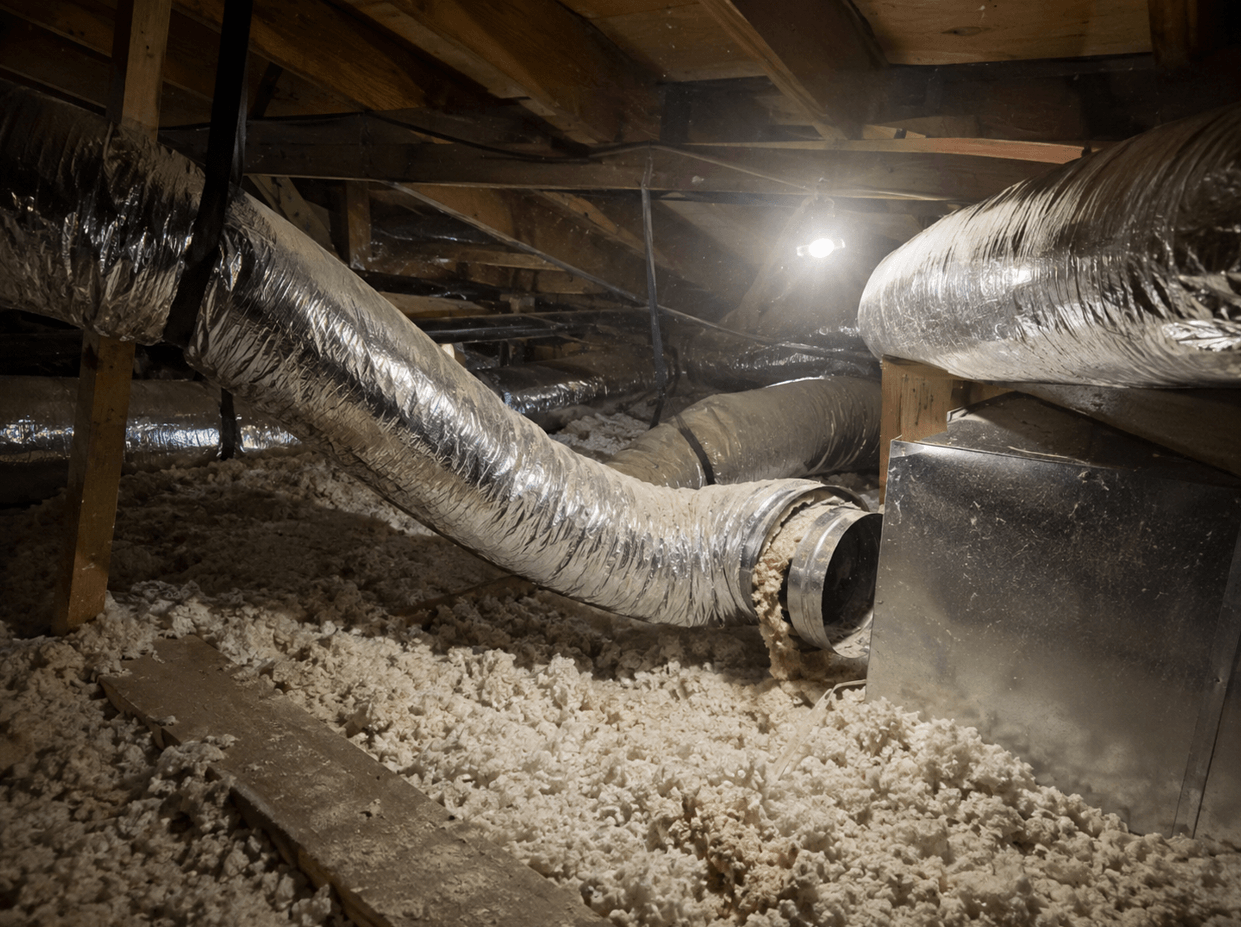
I have opened a lot of attic hatches above homes with new equipment humming downstairs, and the picture repeats. The condenser is three months old. The ductwork is twenty-five years old and sagging, and nobody touched it because nobody was paid to.
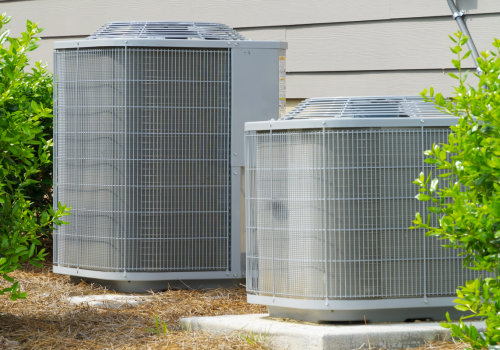
A replacement quote covers the box, rarely the conditions it works in. Air conditioning is heat transfer, only as good as the path the air travels. ENERGY STAR prints that more-than-half figure on the bid comparison checklist it wants homeowners handing contractors before signing, which tells you how routine this is.
Is It the New System, or the 2026 Rate Increases?
Some of it is the rates. EIA puts the 2026 average residential price near 18.2 cents per kilowatt-hour, about 5 percent above 2025, with increases landing unevenly by state. Compare kilowatt-hours against the same month last year, not dollar totals.
Two things trip people up. Most compare the wrong summer, since a system installed in April gets judged on a hotter June. And once you trust an efficient system, the thermostat drops a degree and stays there, enough to erase the savings on paper, and it never gets filed as a change you made.
A national average says little about your own bill. Check the state-by-state figures in the resources below.
Can an Oversized Air Conditioner Raise My Bill?
Yes. An oversized system hits setpoint fast, shuts off, then restarts, so it never settles into its efficient range, and in a humid climate it leaves moisture behind. DOE cites a Florida study where systems oversized by half or more used about 9 percent more cooling electricity a year and pushed peak demand 13 percent higher. That fact sheet dates to 2002, which you deserve to know. Nearly 40 percent of contractors surveyed said they oversize deliberately, citing fewer callbacks. That reason is not about your bill.
Before anything gets measured, take this to read yourself. On a hot afternoon, note how long the system runs each cycle and how the air feels when it stops. Short bursts in a house that feels cold and clammy point to capacity. Long runs in a house that never gets comfortable point to airflow or ducts.
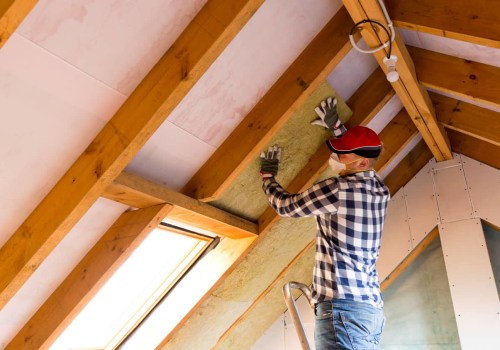
One trap catches careful homeowners. As a house gets more efficient, the correct size drops, so if you spent time making the attic more energy efficient and then replaced at the same tonnage, you may have oversized by doing two good things in the wrong order.
How Do I Know if the Airflow Was Ever Measured?
Ask one question: what were the measured airflow and static pressure after installation? A quality install verifies airflow against the manufacturer's specification, and if nobody can produce a number, it was not measured. Airflow problems alone cost up to 15 percent of efficiency.
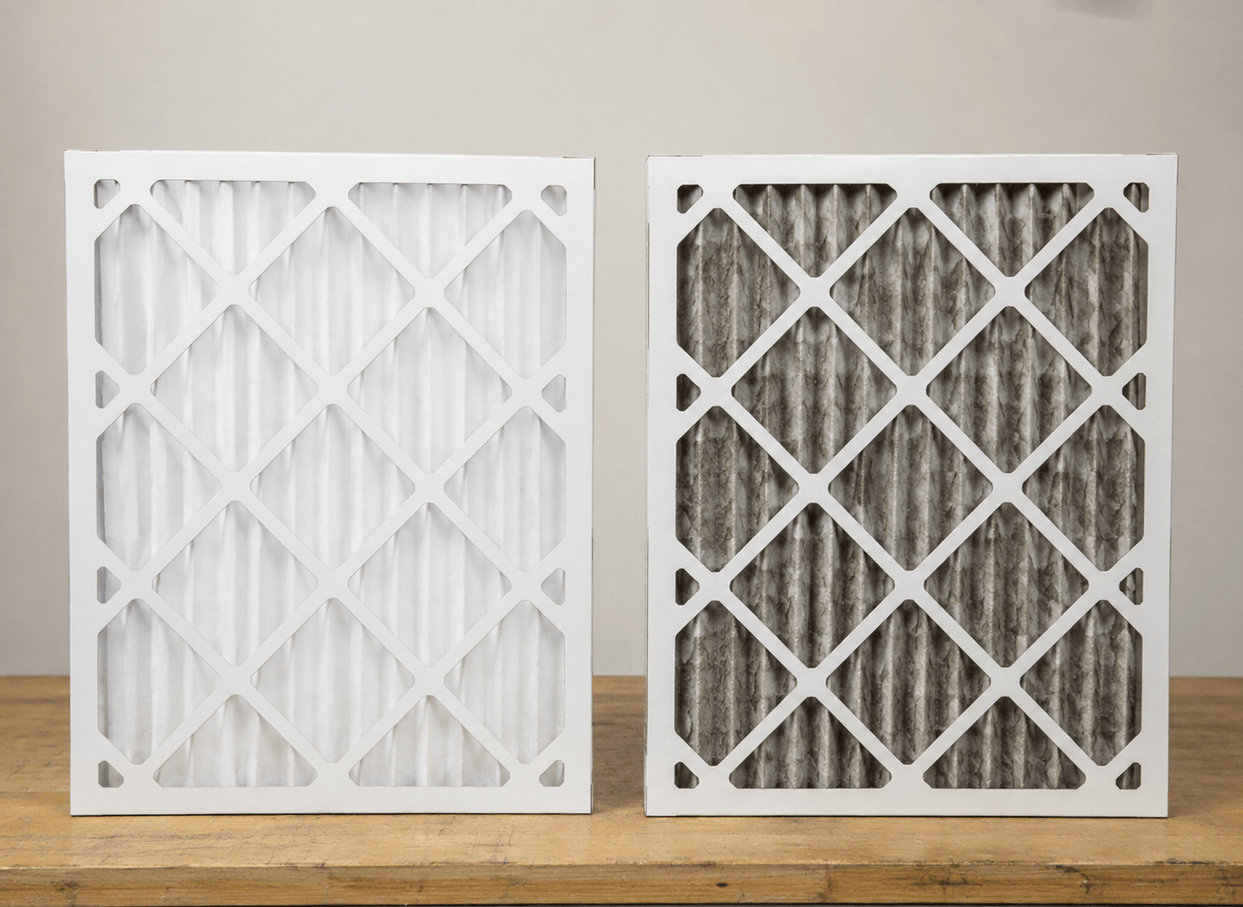
The filter is where you touch this. A loaded filter narrows the path, so the system runs longer. Overcorrecting also hurts, since a filter more restrictive than the system was built for reduces airflow, the trade-off MERV ratings describe.
Then check how the filter sits in its slot. A gap at the edge lets air bypass the media, and I find more bypassing than clogging. Bypass is worse, because the dust lands on the coil and insulates it. The dos and don’ts of replacing a furnace filter cover direction and fit.
Do Attic Ducts Cancel Out a High-Efficiency System?
They can erase much of the benefit. DOE reports attics reaching 135 degrees Fahrenheit while duct air sits at 55 to 60, with simulation showing systems losing about 30 percent of peak sensible capacity to that gap alone. Another 20 to 30 percent of duct air escapes through leaks and bad joints.
Duct insulation on residential flex runs R-4 to R-6, holding back a 75-degree difference along every foot. Return leaks are worse than supply leaks in my experience, because they drag hot attic air into equipment never sized for it. Oversizing compounds it, since higher duct pressure leaks more.
Two habits worth borrowing. Inspect your ducts when the attic is hot, not at eight in the morning, because sag and tape failure only occur under load. And compare the air at your nearest register against the furthest, since supply air leaves at 55 to 60 degrees. If the far one is much warmer, that difference went into your attic. See what a professional duct sealing job involves.
What if It Is Not the Installation at All?
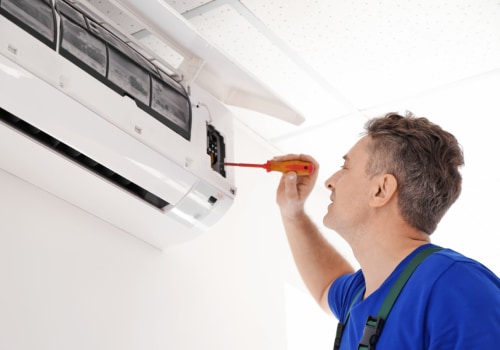
Sometimes it genuinely is not, and ruling these out is worth as much as finding the culprit. A drifted refrigerant charge mimics an airflow problem almost exactly. A failing blower or capacitor raises consumption before it changes how the house feels. On a new heat pump, backup heat strips can engage far more often than anyone warned, which is a controls setting rather than a sizing fault. Treat anything added the same season as a suspect, and check you have not moved onto time-of-use pricing.
"Every one of these houses had a good machine in it. What none of them had was a single person whose job it was to look at the space the machine had to work in. That is the gap, and you can usually close it for a fraction of what the equipment cost." - Roderick Caughey, Staff Writer, attic-insulation-installation.com
4 Essential Resources
- Check Rate Changes, State By State, and How to Reduce Electric Bill in 2026. Published by Filterbuy. Year-over-year residential price movement from U.S. Energy Information Administration data, and where household energy actually goes.
- ENERGY STAR: HVAC Quality Installation. The four things to require from any installer: correct sizing, verified airflow, correct charge, and an evaluated duct system.
- ENERGY STAR: Duct Sealing. The symptom checklist for poor ductwork, plus what to seal with and what never to use.
- U.S. Department of Energy: Right-Size Heating and Cooling Equipment. The sizing research behind this article, including the Florida oversizing and attic heat-gain figures.
3 Statistics Worth Remembering
More than half of new U.S. systems miss their rated efficiency because of improper installation, and a bad install can cut performance by up to 30 percent.
Source: bid comparison checklist
Up to 15 percent of a system's efficiency can be lost to airflow problems.
Source: maintenance checklist
20 to 30 percent of the air moving through a typical duct system escapes through leaks and bad joints.
Source: duct leakage testing
Final Thoughts
My honest view after enough attics is that the industry sells equipment while homeowners buy outcomes, and the gap is where the disappointment lives. Nobody lied to you. The rating is real, and it was measured under conditions that do not exist above your ceiling.
The sequencing lesson is the one nobody gets told. Improve the envelope first, then size equipment to the house you have made. Reverse that order, and you pay twice, once for capacity and once for the insulation that made it unnecessary.
Your Next Steps
1. Compare kilowatt-hours, not dollars, against the same month last year, and be honest about whether that month ran hotter.
2. Time a cycle and check two registers. Cold and clammy points at capacity. A far register much warmer than the near one points at the attic.
3. Ask for three documents. The load calculation, the airflow and static pressure recorded after commissioning, and the duct leakage result. By name, in writing.
4. If the numbers do not exist, ask for the work to be documented now. A technician can measure an installed system in minutes. Check your warranty paperwork too, since an undocumented install can risk your coverage.
5. Quote the ductwork as its own job, and walk the attic in the afternoon first. Stay on the joists.
Frequently Asked Questions
Should a New AC Lower My Electric Bill?
Usually, but only if the conditions around it were addressed. In the homes I have looked at, it tracks almost entirely with whether anybody touched the ductwork. A higher-rated system at the wrong size, feeding leaky attic ducts, can use as much power as the unit it replaced.
Is Short Cycling Bad for an Air Conditioner?
Yes, on two fronts. It keeps the system out of its efficient range, which costs energy, and the repeated starting and stopping accelerates wear. In humid climates, less moisture gets removed, so a house can feel cold and clammy at once.
Should I Seal Ducts or Add Attic Insulation First?
Seal the ducts first in most cases. Leaking runs push conditioned air out and pull hot attic air in every hour the system runs. Insulation then lowers the temperature those sealed ducts have to survive. Go the other way round, and you bury a leak under fresh insulation.
Is a Higher SEER2 Rating Worth Paying For?
It is worth paying for once the installation can deliver it. A high-SEER2 system on verified airflow, correct charge, and sealed ducts earns its premium. The same equipment feeding leaky attic ducts will not, because the rating assumes conditions your house cannot reproduce.
How Do I Know if My System Was Sized Correctly?
Ask for the Manual J load calculation run on your house, and check that it reflects your current insulation. A quote that copies the old tonnage, or works from square footage alone, is not a load calculation. In my experience, the absence of the document is the answer.
Start With the Conditions, Not the Equipment
Your new system can still deliver most of what you paid for. Ask for the load calculation and the measured airflow, and look at the ductwork above your ceiling before concluding the upgrade was a mistake.
Glossary
Manual J and Manual S. The ACCA sizing procedures. Manual J calculates what a house needs; Manual S selects the equipment.
Short cycling. A system reaching setpoint and shutting off before it has run long enough to operate efficiently. The usual symptom of oversized equipment.
Static pressure. The resistance the blower pushes against to move air through the filter, coil, and ducts, in inches of water column.
MERV. Minimum Efficiency Reporting Value, the scale for how well a filter captures particles. Higher numbers catch finer particles and add resistance.
Filterbuy. Filterbuy is a U.S. air filter manufacturer that makes standard and custom-size HVAC filters and ships them directly to homeowners. It publishes state-by-state 2026 residential electricity rate changes from U.S. Energy Information Administration data.
Learn more about HVAC Care from one of our HVAC solutions branches…
Filterbuy HVAC Solutions - Miami FL - Air Conditioning Service
1300 S Miami Ave Apt 4806 Miami FL 33130
(305) 306-5027
https://maps.app.goo.gl/Ci1vrL596LhvXKU79